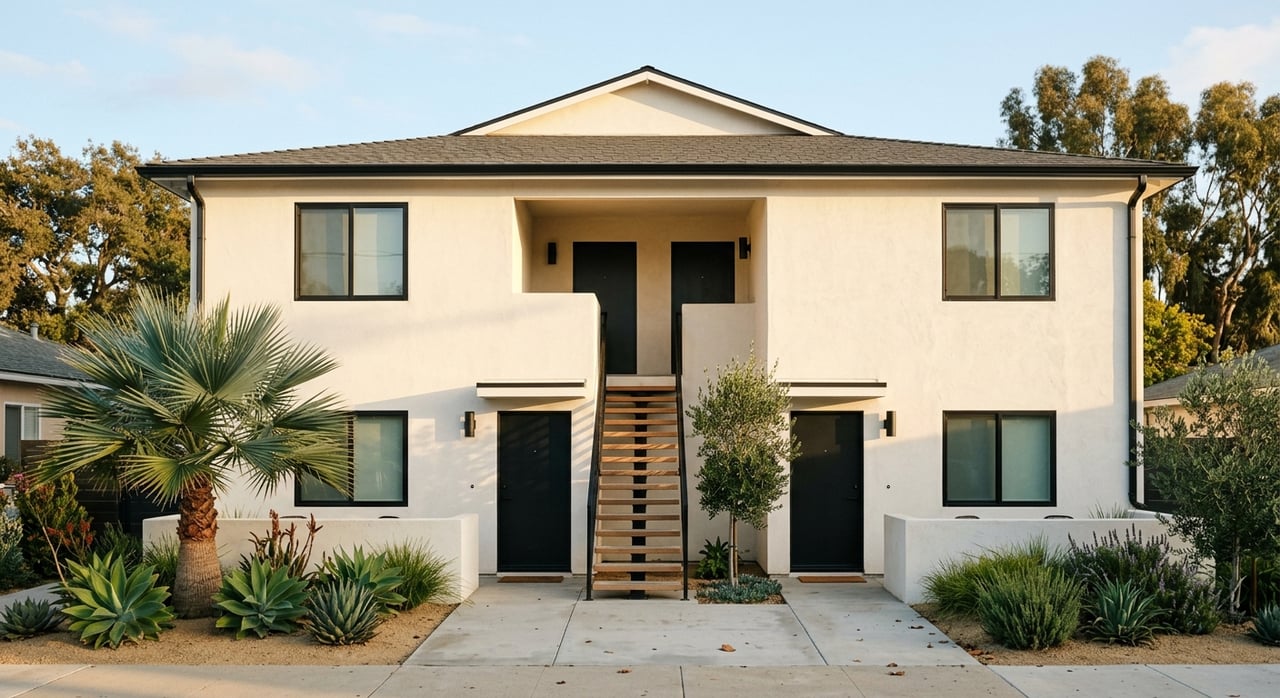
If you are thinking about buying a duplex, triplex, or fourplex in Ventura, the opportunity can look promising at first glance. The city has a meaningful renter base, steady housing demand, and ongoing pressure to add more homes, but small multifamily investing here is not a plug-and-play numbers exercise. To make a smart decision, you need to look closely at zoning, parking, vacancy, state rental rules, and property-specific risks before you commit. Let’s dive in.
Why Ventura draws investors
Ventura offers a mix of owner-occupied housing and rental demand that can appeal to small multifamily buyers. According to the U.S. Census Bureau’s Ventura city quick facts, the city has 109,831 residents, 41,858 households, a 55.9% owner-occupied housing rate, and a median gross rent of $2,198.
Those numbers suggest a real rental market, but they do not tell you what any one property will earn. In practice, income potential in Ventura should be judged by the unit mix, condition, parking setup, and comparable rentals in that specific submarket. That is especially true for smaller buildings, where one vacant unit can change your returns quickly.
Ventura is also a city with active housing-policy pressure. The city’s Housing Element says Ventura must plan for 5,310 new residential units during the 2021 to 2029 RHNA cycle, and the state confirmed substantial compliance in October 2023. For investors, that means multifamily housing remains an important part of the local conversation, especially on infill sites.
Small multifamily is a separate category
One of the biggest mistakes investors make is assuming a duplex is treated like a detached home. In Ventura, that is not the case. The city’s basic zoning requirements distinguish R-1 single-family, R-2 two-family, and R-3 multifamily districts.
That distinction matters because it affects what can be built, how many units may fit on a parcel, and what standards apply. In R-3 zones, Ventura lists densities ranging from 1 unit per 800 square feet of land area to 1 unit per 2,400 square feet, with a 3-story and 45-foot height limit. If you are comparing properties, zoning can change the upside and the risk in a major way.
The city also notes that special circumstances may apply and that the Planning Division should be consulted on specific sites. That is a key due-diligence step because a parcel that looks straightforward online may face limits tied to setbacks, lot shape, access, or other site conditions.
Parking can make or break a deal
In small multifamily investing, parking is not a side issue. It can be one of the main reasons a project works or fails on paper. A recent Ventura staff report for a multifamily project applied parking standards of 1 space for units with one bedroom or less, 2 spaces for units with two or more bedrooms, plus 0.25 guest spaces per unit.
For an investor, those requirements matter in two ways. First, they can limit how many units realistically fit on an infill parcel. Second, they can affect tenant demand and day-to-day operations, especially if a property has larger units but tight on-site parking.
Before you move forward on a purchase, confirm how the existing property is configured and whether the site actually supports the unit count and bedroom mix you want. On smaller parcels in Ventura, parking, setbacks, and density often drive the real answer more than headline asking price.
Underwrite rent and vacancy conservatively
It is easy to see Ventura’s median gross rent and assume strong rent growth will carry the deal. That is not the safest way to evaluate a small multifamily property. While the citywide rent benchmark is useful, it should be paired with realistic rent comps and expense assumptions for the actual building you are buying.
Vacancy also deserves a careful look. Ventura’s housing element technical report cited a 2.9% rental vacancy rate from the 2019 ACS, while a 2025 SCAG county report said apartment vacancy rose to about 5% in early 2025 before easing to 3.6% in the first half of 2025 as demand caught up with supply. That same SCAG Ventura County analysis said rental price inflation fell to less than 2% in 2025.
The takeaway is simple: avoid overly aggressive rent-growth assumptions. Ventura may still offer opportunity, but recent supply and softer rent inflation suggest you should underwrite with discipline, especially in a duplex, triplex, or fourplex where each vacancy hits income harder.
Know the state law framework
A common question is whether Ventura has local apartment rent control. According to a 2025 city staff report on tenant protections, the city does not currently have a local rent stabilization ordinance for ordinary apartment buildings, and it does not currently regulate security deposits. That means investors should pay close attention to California state law rather than assume a local apartment rent board is setting the rules.
The California Attorney General’s guidance on the Tenant Protection Act says the law generally limits annual rent increases to the lower of 10% total or 5% plus the cost-of-living change, and it prohibits eviction without just cause. The Attorney General also notes that SB 567, effective April 1, 2024, strengthened protections and enforcement.
For small owners, one especially relevant issue is the security deposit rule. Ventura’s tenant-protection materials explain that California AB 12, effective July 1, 2024, generally limits deposits to one month’s rent, but small property owners with no more than four units may charge up to two months’ rent. If you are buying a duplex, triplex, or fourplex, that is an important operating detail to understand before setting leasing policies.
It is also worth noting that Ventura’s local rent stabilization ordinance applies to 12 privately owned mobile home parks, not standard apartment buildings. Investors should not confuse those rules with the operating framework for a small multifamily property.
Fire exposure is a Ventura-specific risk
Every market has local risks, and in Ventura, fire exposure can be a meaningful one. The city’s Fire Hazard Reduction Program says the updated Fire Hazard Severity Zone map classifies more than 4,600 acres as moderate, high, or very high hazard areas.
If a property sits in a high or very high hazard zone, vegetation must be maintained within 100 feet of the property or to the property line. For hillside or wildland-interface assets, this can affect maintenance planning, operating costs, and ongoing compliance. It is not a reason to avoid a deal automatically, but it is a reason to verify conditions early.
A practical checklist before you buy
If you are evaluating a small multifamily property in Ventura, keep your process grounded in facts and parcel-level details. A smart review usually includes:
- Confirm the zoning district and how the city classifies the property
- Verify current and potential unit count under site-specific standards
- Review parking requirements based on bedroom count and guest parking
- Compare rents by unit type, condition, and location rather than city averages alone
- Use conservative vacancy and rent-growth assumptions
- Understand how California tenant protection laws apply to the property
- Check whether the small-owner security deposit exception may apply
- Review fire-hazard exposure and vegetation compliance needs where relevant
- Consult Ventura Planning on any site with unusual features or redevelopment potential
The strongest investment decisions in Ventura are usually the ones made with patience. Small multifamily can be a viable play here, but the numbers need to work after you account for zoning reality, operating rules, and local risk factors.
Why local guidance matters
When you are buying an income property, you are not just choosing a building. You are choosing a set of rules, costs, and management realities tied to that exact parcel. In Ventura, a good opportunity can quickly look different once you account for parking layout, vacancy assumptions, fire exposure, and state tenant laws.
That is why local, broker-led guidance can help you avoid expensive assumptions. If you want help evaluating a duplex, triplex, fourplex, or small income property in Ventura, connect with Truth Realty for straightforward advice, local insight, and practical next steps.
FAQs
Is a duplex in Ventura treated like a single-family home?
- No. Ventura’s zoning materials distinguish R-1 single-family, R-2 two-family, and R-3 multifamily districts, so the analysis is different for duplexes and other small multifamily properties.
Does Ventura have apartment rent control for small multifamily properties?
- Not currently for ordinary apartment buildings. The city’s 2025 staff report says Ventura does not have a local rent stabilization ordinance for standard apartments.
How important is parking for Ventura multifamily investing?
- Very important. Ventura materials show unit-size-based parking requirements, and parking can be a deciding factor in whether a site or project works.
What vacancy rate should you assume for a Ventura small multifamily property?
- You should use conservative, property-specific assumptions. Recent city and county data show Ventura has absorbed new supply, but rent growth and vacancy can vary by building and submarket.
What is a key local risk for Ventura multifamily owners?
- Fire-hazard exposure can be significant on some properties, especially in hillside or wildland-interface areas, where vegetation compliance may be required.